


Hair Thinning Myths vs Facts: Separating Truth from Fiction

18 August 2026

Hair Experts @ AHS

Everyone in India has an opinion on hair thinning. Almost none of it is based on anything real. Between what your aunt swears by, what the salon guy recommends, and whatever's trending on Instagram, good luck figuring out what's actually true. Meanwhile, people delay getting real help and stick with remedies that were never going to work in the first place.
This blog takes a closer look at the most common hair-thinning myths, replaces them with clear facts, and explains what genuinely helps when thinning becomes a real concern rather than a passing worry.
Why Are There So Many Myths About Hair Thinning?
Hair thinning myths spread the way parlour gossip does. Someone notices extra strands on the pillow, mentions it to a relative, and within days that becomes a fully formed theory. Add social media to the mix, and hair loss myths multiply faster than anyone can fact-check them.
A few reasons these myths stick around:
- Family advice gets repeated without being questioned.
- The real causes of hair thinning are biological and rarely explained simply.
This blog separates noise from science, covering common hair-thinning myths, dermatology-backed hair-thinning facts, and what a genuine hair-thinning treatment plan looks like.
Myth 1: Hair Thinning Only Happens as You Age
For most men, hair thinning comes down to genetics: a sensitivity to DHT, a hormone that slowly shrinks the follicles over time. It can start as early as your twenties.
Hair thinning in women often connects to hormonal shifts such as pregnancy, PCOS, or menopause rather than age alone. Family history matters too, since both hair thinning in men and in women tends to appear earlier when a parent or grandparent thinned hair early.
Myth 2: Washing Hair Too Often Causes Hair Thinning
This is one of the most persistent hair loss myths. Hair moves naturally through growth and shedding phases, and washing does not interrupt that cycle. It only releases strands already in their resting phase.
What actually affects the scalp:
- After enough washes, oil and product buildup begin to irritate the follicles.
- A clean, balanced scalp just supports better regrowth.
If you're shedding more than usual, your shampoo probably isn't the problem. More likely it's stress, a nutrient deficiency, or something hormonal.
Myth 3: Wearing Hats Leads to Hair Thinning
Hats do not cut off oxygen to the scalp. Follicles receive nourishment through blood vessels beneath the skin, not airflow above it. The real concern is hygiene, since a cap worn daily without washing can trap sweat against the scalp.
Myth 4: Hair Thinning Only Affects Men
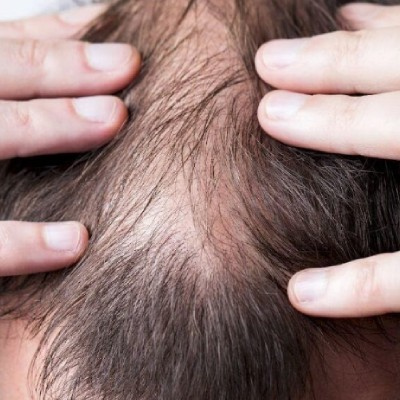
Hair thinning in women is far more common than most people assume, and it tends to look different. Instead of a receding hairline, women often notice diffuse thinning across the crown or a widening centre parting.
Common triggers include:
- Thyroid imbalances or low iron and ferritin levels
- Postpartum shedding, known clinically as telogen effluvium
The causes of hair thinning in women deserve the same clinical attention as in men, since both experience real physical and emotional impacts.
Myth 5: Cutting Hair Makes It Grow Thicker
A haircut removes only the visible strand, made of keratin, with no link to the follicle beneath the scalp. Growth occurs entirely beneath the surface, so trimming does not affect thickness or density. Regular trims reduce breakage and make hair look healthier, but they won't reverse actual thinning.
Myth 6: Natural Oils and Home Remedies Can Cure Hair Thinning
Coconut oil, onion juice, rice water. Every Indian kitchen has these, and they do genuinely help with scalp conditions and breakage. Good nutrition matters too, especially protein, iron, and biotin.
But nutrition only goes so far. It won't regrow a bald patch, and it can't reverse follicles that have already begun to shrink. Once thinning's gotten to that point, you need an actual plan from a specialist, not just what's sitting in the pantry.

Proven Treatments for Hair Thinning
Once the myths are cleared, real hair restoration treatment options become easier to understand. Different causes of hair thinning call for different approaches, and no single hair transplant or medication suits every case.
Medications
Topical and oral options slow shedding by interrupting the hormonal process behind follicle shrinkage. As hair-thinning treatments, these work well when started early and should always be taken under medical guidance rather than self-prescribed.
PRP Therapy
PRP takes growth factors from your blood and uses them to reactivate follicles and help the scalp heal. It's often used alongside other treatments, but the results depend largely on how advanced the thinning already is.
Low-Level Laser Therapy (LLLT)
This non-invasive option, often delivered through programmes such as Advanced Laser Therapy, uses light energy to boost circulation and cellular activity within the follicle. It works well as part of a consistent, ongoing routine rather than a single session.
Hair Transplant Surgery
For advanced thinning, a hair transplant remains one of the more permanent options available. Techniques such as Strand-by-Strand relocate healthy follicles from denser areas to thinning areas, where they continue to grow naturally once settled. An experienced surgical team matters greatly, since hairline design decides how natural the result looks.
Non-Surgical Hair Restoration
For people who prefer to avoid surgery, non-surgical hair replacement has evolved well beyond old methods. Solutions like Strand-by-Strand Cosmetic are lightweight and designed to move like natural strands, giving an immediate change without downtime.
When Should One Consult a Hair Restoration Specialist?
Ask yourself these questions honestly:
- Has your hair changed noticeably over recent months, or been an ongoing concern for years?
- Have home remedies stopped making any visible difference?
If any of these sound familiar, a consultation is worth booking. A trichoscopy or scalp analysis helps separate hair thinning facts from assumptions and identifies the actual causes of hair thinning behind your case, whether that is genetics, hormones, stress, or a scalp condition. From there, a proper hair restoration treatment plan, including options such as PRP for hair thinning, can be recommended under qualified medical supervision.
Your Next Step With AHS India
You've probably already heard half a dozen "facts" about hair thinning, most of them wrong. The problem is that they stick and end up shaping the decisions people make about their own hair. Worth unlearning them before you decide anything.
At AHS India, treatment starts with actually looking at your scalp, not handing you the same plan as the last ten people who walked in. Depending on what's driving the thinning, that might mean a laser-based programme, non-surgical hair replacement, or a transplant, but the team figures out the cause first.
If this has been on your mind, book a consultation. Get someone actually to look before they tell you what to do.



Stay Updated
Subscribe to our email newsletter for helpful tips and valuable resourses
Be an influencer
Join forces with Advanced Hair Studio! Explore exciting collaboration opportunities tailored for influencers. Let's redefine haircare together.
Connect now
