


Male Pattern Baldness vs Temporary Hair Loss: How to Tell the Difference

26 June 2026

Hair Experts @ AHS

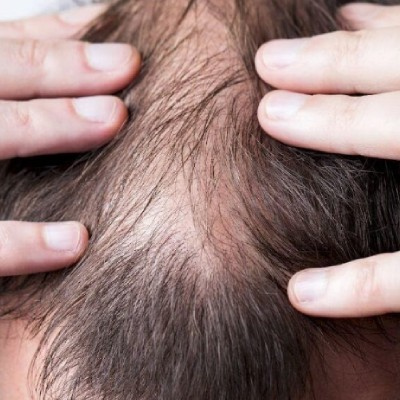
It usually starts with small details that are easy to miss at first. A hairline that does not look quite the same in certain lighting. A part that seems slightly wider than it used to. A few more strands left behind after washing or combing. These changes often feel minor in isolation, but together they begin to raise concern.
It usually starts with small details that are easy to miss at first. A hairline that does not look quite the same in certain lighting. A part that seems slightly wider than it used to. A few more strands left behind after washing or combing. These changes often feel minor in isolation, but together they begin to raise concern.
Hair loss in men is not a single condition. Male pattern baldness vs temporary hair loss look similar in the early stages, but are driven by entirely different causes and need entirely different responses. Treating one as the other either delays care for something that genuinely needs attention or creates unnecessary worry over something that was always going to resolve on its own.
Why Hair Loss Happens
Hair grows in a cycle. Each follicle moves through a growth phase (anagen), a transition phase (catagen), and a resting phase (telogen), after which the hair sheds and the cycle begins again. When this cycle is disrupted or when the follicle itself is permanently damaged, visible hair loss follows.
The causes of hair loss in men fall into two distinct categories. The first involves genetics and androgen hormones, which drive progressive, irreversible follicle damage. The second involves external stressors, illnesses, or nutritional deficiencies that temporarily disrupt the hair cycle. The category determines the treatment, and confusing the two is one of the most common reasons men do not get the result they are looking for.
The Difference Between Permanent and Temporary Hair Loss
Permanent hair loss involves the progressive miniaturisation of hair follicles due to DHT (dihydrotestosterone) sensitivity. As the follicle shrinks over time, it produces progressively thinner, weaker strands until it stops functioning altogether. This process does not reverse without clinical intervention.
Temporary hair loss occurs when an event or stressor throws off the hair cycle. The follicles are not harmed and can continue to produce hair. Normal hair growth usually returns if the problem is corrected. However, good nutrition supports hair health but cannot regenerate follicles that have already permanently miniaturised.
What Is Male Pattern Baldness?
Male pattern baldness, medically known to be androgenetic alopecia, is by far most common cause of hair loss in men in India. It is a genetic and hormonal condition. If baldness runs in your family, there is a reasonable chance your follicles are sensitive to DHT, a derivative of testosterone. Over time, DHT binds to those follicle receptors and gradually shrinks them, producing progressively thinner strands until the follicle stops functioning altogether.
Male pattern baldness might begin as early as the 20s and 30s. The fact that it starts young and progresses slowly is exactly why so many men dismiss the early signs, only to find the condition significantly advanced by the time they seek help.
How Male Pattern Baldness Presents
- The first sign is usually a receding hairline that looks like an M or a V shape at the temples.
- Crown hair loss can happen on its own or in combination with a receding hairline.
- In some cases, diffuse hair thinning in men across the top of the scalp occurs without a clearly defined hairline recession.
- The hair at the back and sides of the head is usually unaffected, as those follicles are genetically resistant to DHT.
Male pattern baldness follows a predictable progression. Without intervention, it continues advancing. The follicles in affected areas do not recover on their own because the genetic and hormonal drivers of the condition remain active.
What Is Temporary Hair Loss?
Temporary hair loss, most commonly presenting as telogen effluvium, happens when a large number of follicles are prematurely pushed into resting phase of the hair cycle. The shedding typically becomes noticeable two to three months after the triggering event, which is why many men fail to connect the hair loss to its actual cause.
Common Triggers of Temporary Hair Loss
- Prolonged illness or a high fever that stresses the body
- Significant emotional or physical stress sustained over weeks or months
- Nutritional deficiencies, particularly in iron, zinc, and certain B vitamins
- Thyroid dysfunction, which disrupts the hormonal balance that supports hair cycling
- Sudden or severe weight loss
- Certain medications taken over an extended period
It's important to note that the main difference between the two types of hair loss is that temporary hair loss causes generalised shedding across the scalp, whereas localised shedding occurs at the crown or hairline. No baldness line and no crown baldness. The overall density decreases equally throughout the head.
After determining and addressing the root cause of hair loss, regrowth usually starts slowly over time. Usually, hair density is restored to normal without any special treatment of the lost hair. This is not always the case, though, and the only surefire method is to have it professionally assessed.

Male Pattern Baldness vs Temporary Hair Loss: Major Differences
The table below clearly lays out the core clinical differences between the two conditions.

This table is not a diagnostic tool on its own. These differences provide a useful starting framework, but the only reliable way to determine which condition you are dealing with is through a proper clinical assessment by a trained hair specialist.
How Hair Specialists Diagnose the Type of Hair Loss
Self-assessment is unreliable for accurately identifying the type of hair loss. The patterns overlap in the early stages, and getting it wrong has real consequences for both the timeline and the effectiveness of treatment. A structured diagnostic approach by a trained hair specialist removes that uncertainty.
1. Scalp Examination and Hair Analysis
A clinical scalp examination uses trichoscopy and hair analysis techniques to assess the scalp in detail, mapping follicle density, miniaturisation patterns, and hair health across different zones. This zone-specific analysis is particularly revealing:
- In , follicles at the hairline and crown show visible miniaturisation, while those at the back and sides of the head remain fuller and structurally healthy.
- In temporary hair loss, follicle density is more uniformly reduced across the scalp without the zone-specific miniaturisation pattern that characterises androgenetic alopecia.
- A pull test, gently pulling a small cluster of hairs from different scalp zones, can assess how many follicles are currently in the resting or shedding phase and whether this is proportional or elevated.
2. Medical History Review
A comprehensive medical and lifestyle history is used alongside the scalp examination to identify patterns that may not be detectable on physical examination. The history of the patient's recent illness, major stress, change of diet, sleep problems, medication use, and even family history of balding all add to the profile.
If the cause can't be determined after the physical examination, blood test may be ordered to evaluate thyroid function, iron levels, and other related markers. This is what separates a treatment plan that actually works from one built on guesswork.
When Should You Seek Professional Help?
If you notice a receding hairline, crown hair loss, or hair thinning in men along the top of the scalp in a recognisable pattern, the right time to consult a specialist is now. Male pattern baldness is progressive. Every month without intervention leads to further follicle miniaturisation, narrowing the options later. The earlier the condition is recognized, the more options remain available.
If you are experiencing sudden, widespread shedding following an illness, a period of intense stress, or a significant dietary change, a specialist can confirm whether natural hair regrowth is likely and rule out any conditions that require active treatment. Either way, the goal of an initial consultation is to understand what is happening clearly, not to commit to a procedure.
Get a Precise Diagnosis at Advanced Hair Studio India
Telling male pattern baldness apart from temporary hair loss requires a clinical assessment, not self-diagnosis. Advanced Hair Studio has spent over 50 years working with every stage and type of hair loss in men, serving more than a million clients across 300 studios worldwide, including Mumbai, Delhi, Bangalore, and Hyderabad.
The Advanced Hair Check assesses follicle health across all affected zones and maps your scalp condition in detail before any recommendation is made. Solutions are then built entirely around your profile. For early-stage thinning, the Advanced Hair and Scalp Fitness Program combines FDA-approved laser therapy with a structured hair treatment protocol. Advanced Laser Therapy stimulates dormant follicles and helps slow active shedding, with no downtime. Not everyone needs a surgical route. For those who prefer a non-surgical path, Strand-by-Strand Cosmetic delivers an immediate result that matches your exact hair colour, texture, and growth direction. For those who do want a permanent solution, Strand-by-Strand Ultimate is Advanced Hair Studio's flagship hair transplant procedure, performed exclusively by specialist hair surgeons to restore a natural hairline that lasts. When hair loss has progressed across multiple areas, AHS Complete addresses full-density and hairline restoration from a single initial assessment.
Every plan begins with an honest evaluation. Book a confidential consultation today and find out exactly where things stand.




Stay Updated
Subscribe to our email newsletter for helpful tips and valuable resourses
Be an influencer
Join forces with Advanced Hair Studio! Explore exciting collaboration opportunities tailored for influencers. Let's redefine haircare together.
Connect now
