


You’re Ignoring These Early Signs of Hair Fall (Big Mistake)

18 May 2026

Hair Experts @ AHS

Hair fall rarely announces itself with dramatic overnight shedding. For most people, it begins with things that feel easy to dismiss: a little extra hair on the pillow, a ponytail that seems slightly less full, a hairline that looks marginally different in photographs. Because these changes arrive slowly, the instinct is to assume they are temporary, and that assumption is where the delay begins.
According to the Indian Council of Medical Research, hair and scalp conditions are among the more commonly underreported health concerns in India, partly because early signs are routinely attributed to stress or seasonal change. The early hair fall signs below are the ones people most consistently overlook.
Recognising them sooner is one of the more useful things someone can do for their long-term hair loss prevention.
What the Early Signs Actually Look Like
Most people wait for obvious gaps before taking hair thinning seriously. The table below maps the subtler signals that tend to appear first, and what they may indicate:

Note: These are general patterns. Individual causes vary and are best confirmed through a professional scalp assessment.
Your Hairline Looks Slightly Different
A shifting hairline is one of the earliest and most commonly dismissed hair thinning symptoms. The change tends to be subtle enough that most people only notice it when comparing recent photographs with older ones.
What to look for:
• Mild recession at the temples, particularly in men
• A wider or less defined parting line, particularly in women
• A frontal hairline that looks slightly further back than it used to
• Reduced density around the hairline that shows under direct lighting
Your Hair Feels Less Dense Than Before
Many people notice hair thinning through texture and volume before they ever see visible gaps, as follicle miniaturisation causes strands to become finer long before the scalp becomes exposed. Signs that density has started to change:
• A ponytail or braid that feels noticeably smaller when tied
• Hair that lies flatter and has less natural body
• Styling that takes more product or effort to achieve the same result
• Strands that appear finer or more translucent toward the ends
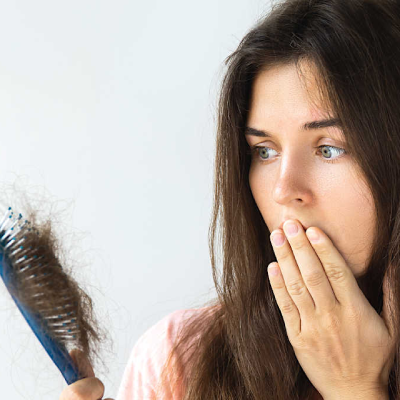
You Notice More Hair During Washing or Brushing
A degree of daily shedding is a normal part of the hair growth cycle. The National Institute of Nutrition, Hyderabad, notes that nutritional factors, including iron and protein deficiency, are among the more common contributors to increased shedding in the Indian population.
When the amount of hair fall starts to feel consistently higher than usual, possible reasons include:
• Nutritional gaps, particularly in iron, biotin, or protein
• Hormonal fluctuations related to pregnancy, menopause, or thyroid imbalance
• Stress-related disruption to the normal growth cycle
• Scalp conditions that are affecting follicle health
Occasional heavier shedding is normal. Shedding that feels persistently elevated over several weeks or months is worth paying attention to.

Your Scalp Is Becoming More Visible
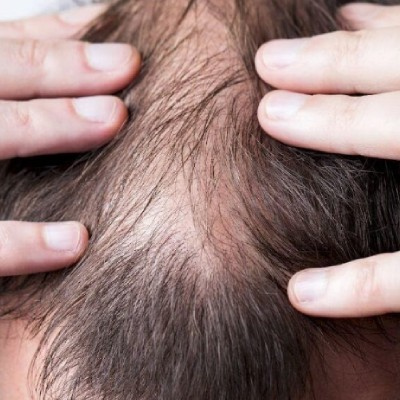
Increased scalp visibility is one of the clearest early hair fall signs, yet it is often dismissed because lighting and styling can make it appear inconsistent from day to day.
Where it tends to show up first:
• The crown area under overhead or bright lighting
• Along the parting line, which may appear wider than before
• Near the temples, where the density has reduced gradually
• In photographs taken from above or from an unfamiliar angle
Hair Is Taking Longer to Grow
When follicles begin to weaken, the active growth phase shortens, and hair may stop reaching its usual length. This slowdown can develop months before visible thinning becomes obvious. What can contribute to it:
• Follicle miniaturisation reduces the length of each growth cycle
• Nutritional deficiencies limit the resources available for hair production
• Scalp conditions restricting healthy follicle activity
• Stress or hormonal changes interrupting the cycle at the growth phase
Increased Stress Is Affecting More Than Your Mind
Stress-related hair fall is widely underestimated, largely because of the delay between the trigger and the shedding. A condition called telogen effluvium can cause significant hair fall several months after the stressful event itself, making the connection genuinely difficult to draw.
Stress-related factors that frequently go unrecognised as contributors to hair thinning:
• Prolonged emotional strain or significant personal life changes
• Physical illness, surgery, or a period of sustained fatigue
• Chronic poor sleep or highly disrupted daily routines
• Nutritional shifts that coincide with a stressful period
Your Scalp Feels Different
Scalp discomfort is one of the earliest signals that something may be affecting follicle function, and one of the most consistently ignored. Scalp symptoms worth taking seriously:
• Persistent itching or irritation that does not resolve with regular washing
• Increased oiliness or noticeable product buildup around the roots
• Dryness or flaking that feels chronic rather than seasonal
• Sensitivity or tenderness across the scalp without an obvious cause
A healthy scalp creates the conditions for stronger follicle activity. Ignoring early scalp discomfort for extended periods may contribute to worsening hair thinning over time.
You Keep Changing Products Without Understanding the Cause
Reacting to hair fall by purchasing multiple shampoos, serums, oils, and supplements is one of the more common responses, and one of the less effective ones. Without understanding what is actually driving the thinning, no product can reliably address it.
Why the product-switching cycle tends to stall:
• Hair loss can stem from genetics, hormones, scalp conditions, nutritional gaps, or overlapping causes
• Most products require consistent use over time before any change can be assessed
• Switching too frequently makes it impossible to identify what is or is not helping
• Some products may irritate an already sensitive scalp, compounding the issue
Genetics May Be Playing a Role Earlier Than Expected
Hereditary hair thinning does not follow a fixed age timeline. Research supported by the Indian Council of Medical Research indicates that androgenetic alopecia can begin as early as the mid-twenties in both men and women, though it often goes unrecognised at that stage because the early changes are subtle.
How genetic thinning tends to present in its early stages:
• Slight recession at the temples over several years, rather than suddenly
• Reduced density at the crown that progresses slowly and without dramatic shedding
• A general reduction in strand thickness that feels more like a texture change than hair loss
• A family history of thinning that was never discussed or identified as genetic
Hair Loss Prevention Is Easier Earlier Than Later
Follicles tend to respond more readily when concerns are addressed in earlier stages, and the range of suitable approaches is wider before thinning becomes severe. What makes early action worth taking:
• More follicles are still active and responding to care
• Scalp health is easier to restore before chronic conditions take hold
• Managing expectations is simpler when the concern has not yet progressed significantly
• In many cases, scalp-focused care and a structured maintenance routine may be helpful in some early-stage cases
Not Every Case Requires the Same Solution
Hair loss is highly individual. Two people with similar-looking hair-thinning symptoms can have entirely different causes and therefore need different approaches. The table below offers a general starting point:

Note: The above is for general awareness only. Suitability for any approach depends on individual scalp health, follicle condition, and a thorough professional assessment.
Final Thoughts
The early signs of hair fall are rarely dramatic, which is exactly why they are so easy to dismiss. A subtly shifting hairline, a ponytail that feels thinner, slower growth, or a scalp that has been uncomfortable for longer than usual: these are all signals worth taking seriously. Understanding the cause early tends to lead to better outcomes than waiting until the thinning becomes impossible to ignore.
If the signs above sound familiar, a conversation with our specialists at Advanced Hair Studio India is a practical next step. We're here to help you find clarity, because the sooner you understand the cause, the more you can do about it.
Disclaimer
The information in this blog is intended for general awareness and educational purposes only and does not constitute medical advice. Hair loss conditions vary significantly from person to person. Readers are encouraged to consult a qualified hair specialist before beginning, adjusting, or stopping any hair treatment. Results from any procedure or therapy depend on individual health, scalp condition, and the stage of hair loss.



Stay Updated
Subscribe to our email newsletter for helpful tips and valuable resourses
Be an influencer
Join forces with Advanced Hair Studio! Explore exciting collaboration opportunities tailored for influencers. Let's redefine haircare together.
Connect now
