


Signs You Are a Good Candidate for Hair Restoration Treatment

22 April 2026

Hair Experts @ AHS

There is a moment most people who are losing hair will recognise. You catch yourself in the mirror at an unusual angle, or someone photographs you from behind, and you realise the change is more significant than you had acknowledged. You have probably already tried a shampoo or two, read a few articles late at night, and wondered whether anything actually works. The bigger question, though, is not whether treatments exist. It is whether any of them is right for your particular situation.
Hair restoration treatment is not a single solution applied to everyone who walks through the door. It is a specialist-led decision shaped by the stage of your hair loss, the health of your follicles, your overall health, and what you are hoping to achieve. Knowing whether you are a strong candidate before you commit to anything is genuinely useful, and that is what this piece is designed to help you work out.
Hair Loss in India Is More Common Than Most People Realise
Many people delay seeking help because they assume their hair loss is temporary or simply part of getting older. In India, that assumption often costs time. Several factors combine to make hair thinning more common and more progressive here than people expect:
- Genetic predisposition to early-onset hair loss
- Hard water, which weakens hair over time with repeated exposure
- Nutritional gaps, particularly low iron and Vitamin D
- Chronic stress, which accelerates shedding cycles
- Environmental pollution, which affects scalp health directly
These are not rare or unusual conditions. They are widespread, well understood, and there are established hair restoration and hair regrowth treatments designed for them. The question is whether you are at a stage where those treatments can make a meaningful difference.
Signs That You May Be a Strong Candidate
Clinical candidacy for hair restoration is not black-and-white, but some signals consistently suggest that a person is well-placed to benefit from treatment. If several of the following apply to you, it is worth having a proper assessment rather than continuing to wait.
Your hair loss follows a recognisable pattern.
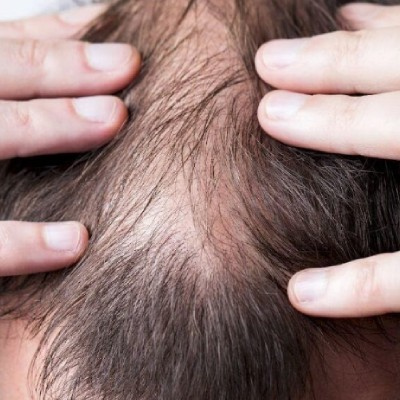
Gradual recession at the temples or frontal hairline in men, and diffuse thinning along the central parting in women, are both characteristic of androgenetic or pattern hair loss. This type of loss has a well-documented pattern and responds to a range of hair restoration and hair regrowth approaches, particularly when addressed before the pattern becomes advanced.
You have noticed a consistent change over the past year or more.
If your hair has been visibly thinner this year than it was 12 or 18 months ago, and the change has been gradual rather than sudden, that trajectory typically points to progressive follicle miniaturisation rather than a temporary response to stress or nutrition.
Your scalp still has active follicles in the areas of concern.
Follicles that are still producing hair, even if that hair is finer or slower-growing than it used to be, are responsive to treatments such as Advanced Laser Therapy. Follicles that have been completely inactive for an extended period may require a different approach. A detailed scalp assessment through our Advanced Hair Check maps follicle health in detail before any plan is formed.
You have a sufficient donor region for surgical restoration.
For those considering a surgical hair restoration procedure such as Strand-by-Strand Ultimate, the density, texture, and characteristics of the donor area play a significant role in determining what is possible. A specialist assessment will provide an accurate picture.
Your hair loss has a known or suspected hormonal or nutritional cause.
A significant proportion of Indian women experiencing hair thinning have underlying factors, including PCOS, thyroid-related changes, post-pregnancy hormonal shifts, or nutritional deficiencies such as low iron or Vitamin D. Where both the deficiency and the follicle health are addressed together, outcomes may be more consistent over time.
You are in good general health with no active scalp condition.
Clients managing active scalp conditions such as seborrheic dermatitis or psoriasis, or those taking blood-thinning medications, will need those factors reviewed and stabilised before any procedure begins. Most people in reasonable general health are suitable for one or more of the available options.
You have realistic expectations and are ready to commit to the process.
Neither surgical nor non-surgical approaches restore hair overnight, and neither can recreate the density of hair you had at 20. What both can do, when matched to the right candidate and carried out properly, is deliver a meaningful, natural-looking improvement that holds over time.

When Hair Restoration May Not Be the Right Route
Being transparent about the limits of hair restoration matters. Not every situation is one where a hair regrowth treatment will produce the results someone is hoping for.
- Where hair loss has progressed to the point that follicles are no longer active, biological regrowth treatments have limited impact. Non-surgical hair solutions can offer an immediate improvement in appearance.
- Sudden, patchy hair loss following a defined circular or oval pattern is more likely to be alopecia areata, an autoimmune condition that requires separate diagnosis before candidacy for standard hair restoration can be considered.
- Active or poorly managed scalp infections, psoriasis, or seborrheic dermatitis need to be stabilised before any restoration procedure begins.
- Clients with blood disorders or those on anticoagulant medications will require medical review and clearance before proceeding.
Surgical vs. Non-Surgical: Which Suits You Better?
Both approaches can produce meaningful results. The right one depends on the stage and pattern of your hair loss, your lifestyle, and your preference for recovery time and ongoing maintenance.

What to Expect at Your First Consultation
The Advanced Hair Check covers the following:
- A detailed history of your hair loss, including how long it has been happening, how quickly it has progressed, and any relevant family history
- A thorough examination of the scalp to assess follicle density, activity levels, and the distribution of loss
- A review of your general health, current medications, and lifestyle factors, including diet, stress levels, and environmental exposure
- An honest discussion of which hair restoration options are suited to your specific situation, with a realistic picture of what each one can achieve
There is no obligation to proceed. The consultation is designed to give you clarity, not to create pressure.
The Longer You Wait, the Narrower the Window
Hair restoration treatment works better the earlier it begins. Follicles that are still active but miniaturising are far more responsive to treatment than follicles that have been completely dormant for years. Most people who eventually seek help wish they had done so sooner, not because earlier options were dramatically different, but because more of them were available.
If you have been watching your hair change over the past several months and wondering whether it is time to do something about it, the answer is usually that it is worth finding out. An assessment costs you a conversation. Waiting may reduce the range of available options.
Disclaimer:
This blog is intended for informational purposes only and does not constitute medical advice. Hair loss affects everyone differently, and the right treatment for you can only be determined through a professional consultation.




Stay Updated
Subscribe to our email newsletter for helpful tips and valuable resourses
Be an influencer
Join forces with Advanced Hair Studio! Explore exciting collaboration opportunities tailored for influencers. Let's redefine haircare together.
Connect now
